Women's Hormone Health
From your first period to perimenopause and beyond, a small group of hormones guides your energy, mood, sleep, weight, skin, cycles and desire. When they fall out of balance, you feel it everywhere. We test thoroughly, look for the root cause, and help bring your body back into balance.
Testing
Detailed labs, plus DUTCH testing when needed
Treatment
Root-cause care, with bioidentical hormones when needed
Follow-up
Closer follow-up, because women’s hormones are complex
You are not crazy.
You are not weak.
You are hormonal.
And hormones can be balanced.
Test your labs Nourish your body Heal your gut Consider BHRT
Self-check
20 questions. Rate how much each symptom bothers you now: none, mild, moderate or severe. Your total helps show how much hormones may be affecting your life.
1. Mood swings or emotional ups and downs
2. Irritability or a short temper
3. Anxiety, nervousness or inner restlessness
4. Feeling down, sad or flat
5. Brain fog, forgetfulness or trouble concentrating
6. Trouble falling asleep or staying asleep
7. Fatigue or low energy
8. Hot flashes
9. Night sweats
10. PMS before your period, such as bloating, breast tenderness or mood changes (choose None if you no longer have periods)
11. Irregular, heavy or painful periods (choose None if you no longer have periods)
12. Weight gain, especially around the belly
13. Joint or muscle aches
14. Heart pounding or racing
15. Dry or thinning skin
16. Dry, thinning hair or hair loss
17. Low sex drive
18. Difficulty reaching orgasm
19. Vaginal dryness or discomfort
20. Bladder urgency, frequent urination or leaking
This questionnaire is for information only. It is not a diagnosis. It is modeled on the kinds of symptom scales used in menopause and hormone care. Only a medical evaluation and lab testing can show what is causing your symptoms. Your answers stay on your device. They are not saved or sent to us.
The big picture
A woman’s body moves through several hormonal seasons. Each one has its own lead hormones, and each brings its own changes. Knowing which season you are in is the first step to understanding what you feel.
1
Usually ages 8 to 14
The brain starts sending FSH and LH to the ovaries. Estrogen rises, the body matures, and periods begin.
2
The reproductive years
A regular monthly rhythm of estradiol and progesterone, guided by FSH and LH. Testosterone and DHEA support energy, drive and desire.
3
Often starts in the 40s, sometimes the late 30s
Ovulation becomes less regular. Progesterone falls first, estrogen swings up and down, and testosterone and DHEA decline. Can last 1 to 10 years.
4
On average around age 51
12 months in a row without a period. The ovaries make much less estrogen and progesterone.
5
The years after menopause
Hormones settle at lower levels. Bone, heart, brain and metabolic health become a bigger focus.
At any stage, when these hormones are out of balance, with each other or with your thyroid, adrenal and insulin hormones, the effects can be wide-ranging: irregular or painful periods, fatigue, weight gain, acne, anxiety, low mood, poor sleep and low desire. Most women are told these symptoms are “normal.” They are common, but they are not something you simply have to live with.
Premenopause
During the reproductive years, your brain and ovaries talk to each other every day through a feedback loop called the hypothalamic-pituitary-ovarian (HPO) axis. These are the main players.
The main form of estrogen in these years. It builds the uterine lining, supports bone, skin, mood, memory and vaginal health, and rises before ovulation.
Made after ovulation. It calms and steadies the lining, supports sleep and a calm mood, and balances the effects of estrogen.
Sent by the brain to wake up follicles in the ovaries so an egg can mature.
A sudden surge of LH triggers ovulation, the release of the egg.
Women make these in smaller amounts. They support energy, muscle, confidence, motivation and libido.
Not sex hormones, but they deeply affect your cycle. Problems with any of them can disrupt ovulation.
A cycle is counted from the first day of one period to the first day of the next. It usually lasts 21 to 35 days, with about 28 days being typical.
Estradiol
Progesterone
LH
FSH
Illustration of a typical 28-day cycle. Real cycles and hormone levels vary from woman to woman.
Estrogen and progesterone are at their lowest. Without a pregnancy, the lining sheds and bleeding begins. FSH starts to rise.
FSH helps several follicles grow. One becomes dominant and makes more and more estradiol, which rebuilds the lining. Energy and mood often lift.
When estradiol peaks, the brain releases a surge of LH (with a smaller rise in FSH). About 24 to 36 hours later, the egg is released.
The empty follicle becomes the corpus luteum and makes progesterone. Body temperature rises by about half a degree to one degree Fahrenheit and stays up until your period. If there is no pregnancy, progesterone and estrogen fall, and the cycle starts again.
Every month, your body prepares for a possible pregnancy. Estrogen builds the lining, ovulation releases an egg, and progesterone gets the lining ready. A regular cycle is also a monthly report card on your health. When it changes, it is often the first sign that something else needs attention.
The first step is always to rule out pregnancy. After that, common reasons include:
PMOS (formerly PCOS) Thyroid problems High prolactin High stress Over-exercising or under-eating Large weight gain or loss Breastfeeding Stopping birth control Perimenopause Some medications Early decline in ovarian function
Disruptions in the cycle can lead to conditions such as PMOS, which we explain in detail below.
Meet your hormones
Pick a hormone to learn what it does and what happens when it falls out of balance.
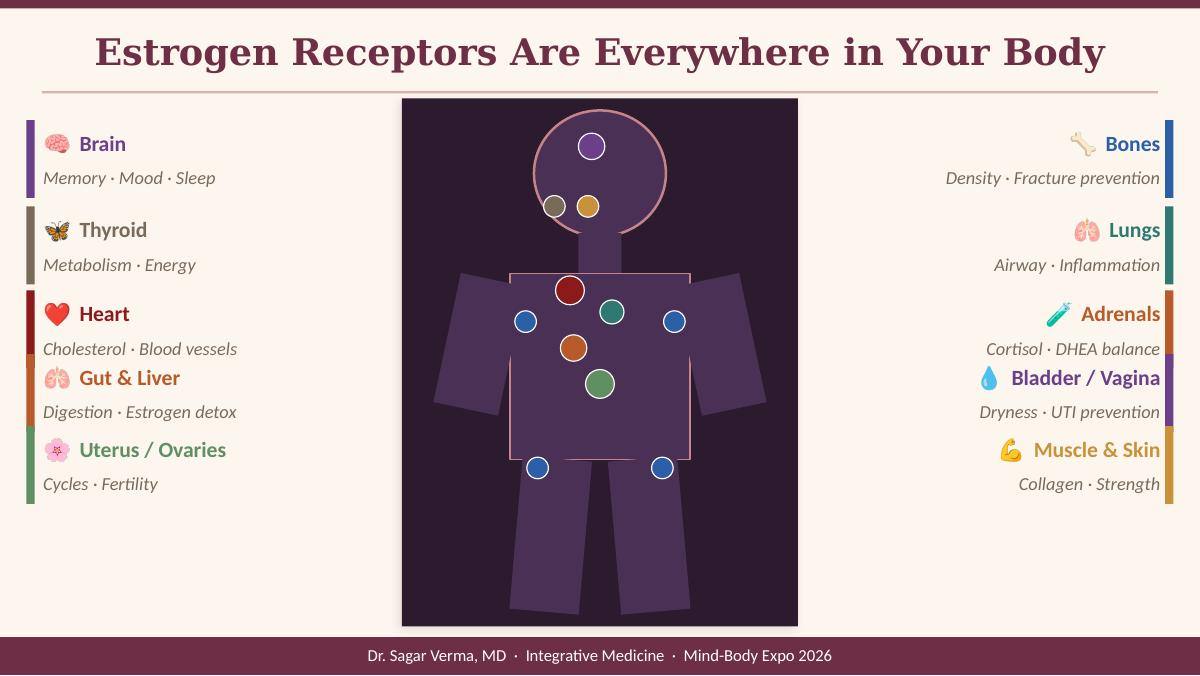
Estrogen receptors are found almost everywhere in your body: brain, heart, bones, skin, gut and liver, bladder, thyroid and adrenals. That is why, when estrogen changes, you can feel it in so many ways at once.
E2
The main and most potent estrogen of the reproductive years, made by the ovaries. It helps protect the brain, heart and bones, and falls sharply at menopause. It is the estrogen used in bioidentical patches and gels.
E1
The main estrogen after menopause. It is made mostly in fat tissue, so it tends to be higher with extra weight and insulin resistance. It is managed through weight, fiber and healthy estrogen metabolism rather than replaced.
E3
The gentlest estrogen, dominant during pregnancy. Used as a cream, it may help vaginal dryness and urinary symptoms with very little absorption into the blood.
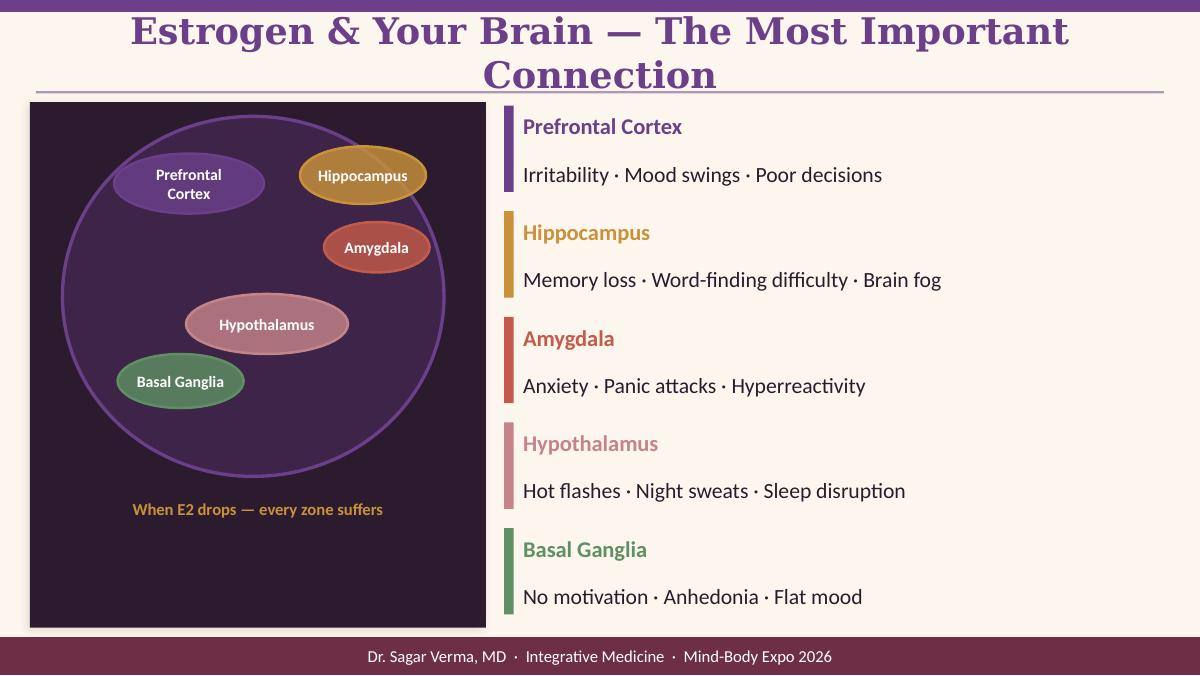
When estradiol drops, different parts of the brain feel it differently: mood swings and irritability, word-finding trouble and brain fog, anxiety and panic, hot flashes and poor sleep, and low motivation. These are real, physical changes, not a character flaw.
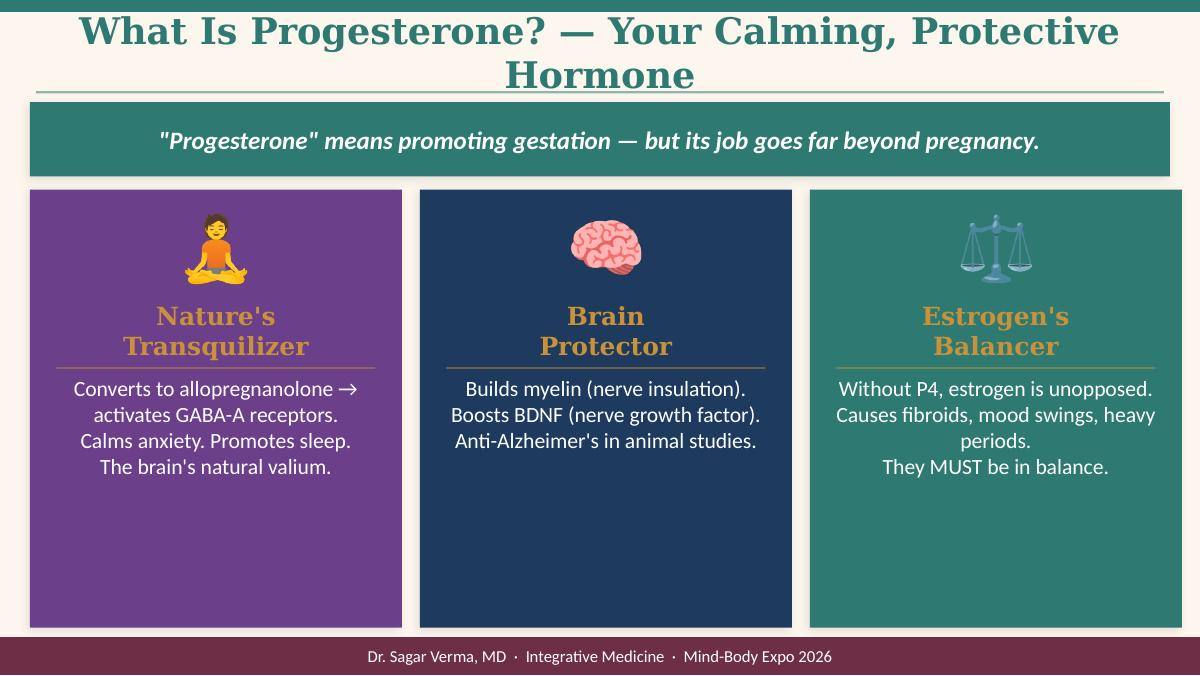
Progesterone is usually the first hormone to fall, often starting in the late 30s, and it is the one most often overlooked.
1
Late 30s
Progesterone starts to decline, before estrogen does.
2
Mid 40s
Estrogen is unopposed, leading to estrogen dominance.
3
Late 40s
Both hormones swing up and down.
4
Around 51+
Progesterone is very low after menopause.
| Bioidentical progesterone | Synthetic progestins | |
|---|---|---|
| What it is | The same molecule your body makes | A lab-made molecule that acts differently |
| Sleep | May support deeper sleep when taken at bedtime | No sleep benefit |
| Mood and anxiety | May have a calming effect | May worsen mood in some women |
| Breast | Current research suggests a more favorable profile, though studies are ongoing | In the large WHI study, a synthetic progestin taken with estrogen was linked to higher breast cancer risk |
| Examples | Micronized progesterone, compounded progesterone | Medroxyprogesterone, norethindrone |
Signs of low progesterone: anxiety, poor sleep, worse PMS, breast tenderness and mood swings.
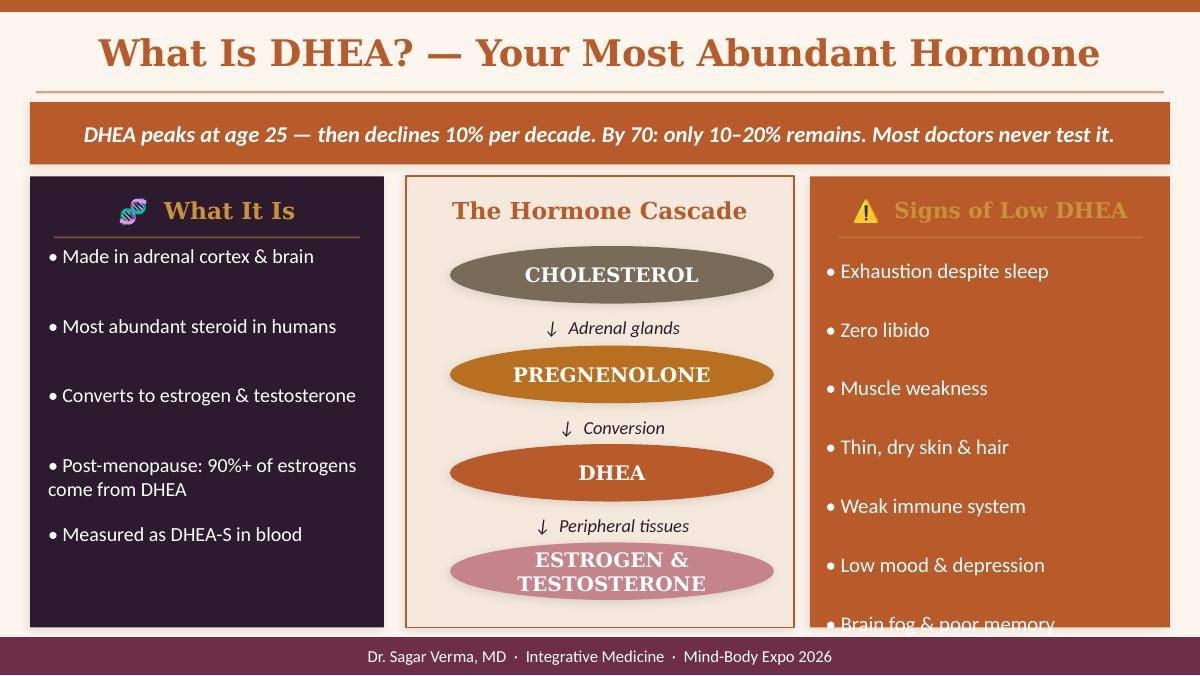
DHEA is the most abundant hormone in the body, made by the adrenal glands and the brain. It peaks around age 25 and declines steadily after that. It is a building block your body turns into both estrogen and testosterone, and after menopause most of a woman’s estrogen is made from it. It is rarely tested.
Women make testosterone in the ovaries and adrenal glands. Levels can fall by about half between the 20s and 40s, well before menopause. It supports libido, energy, muscle, bone, brain function and confidence.
A low dose, taken in the morning, only after testing your DHEA-S level. Too much may cause oily skin or acne, so we recheck labs.
An FDA-approved vaginal insert (prasterone) that converts to estrogen and testosterone locally. It may ease dryness and painful sex without raising estrogen in the blood.
A low-dose compounded cream for women with low levels and symptoms. Use in women is off-label, and we monitor your labs.
Cortisol is your survival hormone. Short bursts are essential: it wakes you up in the morning, balances blood sugar and calms inflammation. But when stress never lets up, high cortisol can disrupt every other hormone.
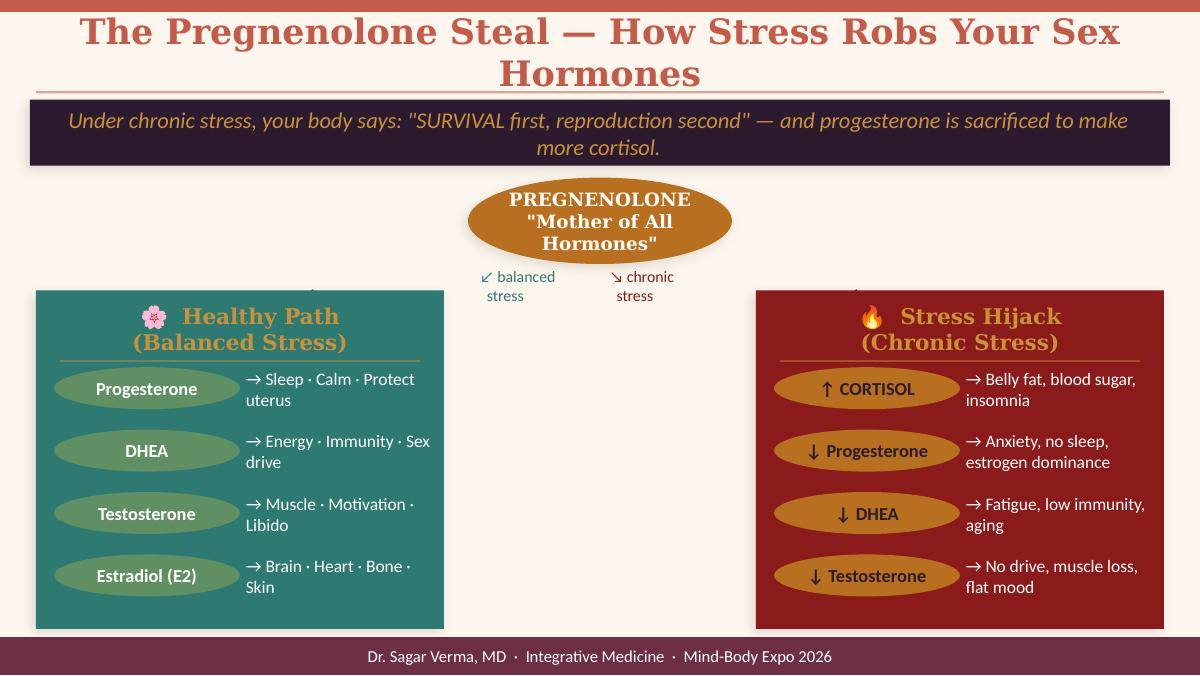
The “pregnenolone steal” is a simple way to picture it: under chronic stress, the body prioritizes survival, and the building blocks that would make progesterone, DHEA and testosterone are pulled toward stress hormones instead. The real biology is more complex, but the effect, lower sex hormones under long-term stress, is something we see often.
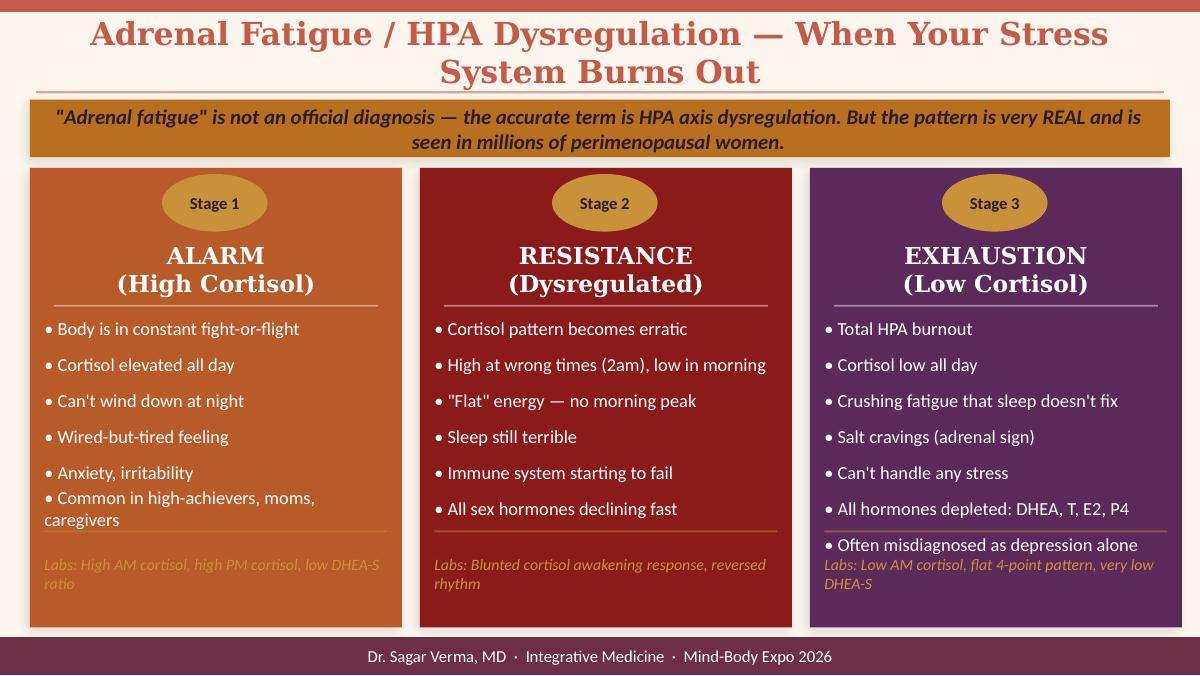
“Adrenal fatigue” is not an official diagnosis. The accurate term is HPA axis dysregulation, but the pattern is real. It often moves through stages: wired and anxious with high cortisol, then an erratic pattern (awake at 2 a.m., exhausted in the morning), and finally low, flat cortisol with crushing fatigue. It is often mistaken for depression alone.
Thyroid problems are common in midlife women, and the symptoms can look almost exactly like perimenopause or menopause. The thyroid controls metabolism, energy, heart rate, body temperature, mood, digestion, cycles, hair, skin and bone turnover. Its hormones reach every cell in the body.
That is why we check a full thyroid panel: TSH, free T4, free T3, reverse T3 and thyroid antibodies (TPO and thyroglobulin), not just TSH.
Good to know: estrogen taken by mouth can raise a protein that binds thyroid hormone, so thyroid doses may need adjusting. Estrogen through the skin has less of this effect.
| Symptom | Menopause? | Thyroid? |
|---|---|---|
| Fatigue | Yes | Yes |
| Weight gain | Yes | Yes |
| Brain fog | Yes | Yes |
| Low mood | Yes | Yes |
| Dry skin and hair | Yes | Yes |
| Poor sleep | Yes | Yes |
| Joint pain | Yes | Yes |
| Feeling cold | Not usually | Yes |
| Constipation | Not usually | Yes |
| Slow heart rate | Not usually | Yes |
PMOS (formerly PCOS)
PCOS has a new name. In May 2026, after a worldwide consensus process involving thousands of patients and experts, polycystic ovary syndrome was renamed Polyendocrine Metabolic Ovarian Syndrome, or PMOS. You will still see “PCOS” for a few years while the change rolls out.
The old name pointed to “cysts” on the ovaries. But many women with this condition have no cysts at all, and the cysts were never the cause. The new name describes what is really going on: a condition involving many hormone systems (polyendocrine), metabolism, and the ovaries. It is not just a problem of the ovaries.
Doctors have long used the Rotterdam criteria, where two of three findings point to the diagnosis: irregular or absent ovulation, signs or lab evidence of high androgens (male-type hormones), and polycystic-appearing ovaries on ultrasound. These criteria are useful, but they do not tell the whole story. PMOS also affects insulin, thyroid, adrenal hormones, inflammation, the gut and the brain-ovary connection, and we look at all of them.
The body needs more and more insulin to manage blood sugar. High insulin pushes the ovaries to make more testosterone and makes weight harder to lose. It is found in most women with PMOS, including many who are lean.
Low or poorly working thyroid hormone is common alongside PMOS and can worsen irregular cycles, fatigue and weight gain.
The signals between the brain and ovaries fall out of rhythm. LH is often high compared with FSH, so eggs do not mature and ovulation does not happen regularly.
In some women, the adrenal glands make extra androgens, especially under long-term stress.
Low-grade inflammation can raise androgens and worsen insulin resistance, acne and fatigue.
An unbalanced gut microbiome is linked to inflammation, insulin resistance and how hormones are cleared from the body.
Many women live with these symptoms since their teens. Periods are irregular, skin breaks out, and hair grows where it shouldn’t. Too often, the only option offered is to regulate the bleed. That can make the calendar look normal, but it does not fix what is driving the problem.
Our approach is to find and treat the underlying mechanisms, including insulin resistance, thyroid health, stress, gut health and inflammation, so your body can find its own rhythm again.
PMOS does not look the same in every woman. These patterns overlap, and many women have more than one. Knowing your type helps us target your plan.
The most common type. High insulin drives testosterone up and ovulation down. Often linked with weight gain and sugar cravings, but not always.
PMOS in women at a healthy weight. It is often missed because women “don’t look like” they have it. Insulin, adrenal and inflammatory factors still play a part.
Driven by ongoing inflammation. Often comes with fatigue, headaches, skin problems, joint pain or digestive issues.
Androgens come mainly from the adrenal glands rather than the ovaries, often with high stress. DHEA-S may be elevated.
Symptoms that appear after stopping hormonal birth control, as the body restarts its own cycle. It is often temporary but may need support.
Processed foods, refined carbs and sugar raise insulin. Whole foods with protein, fiber and healthy fats may help steady blood sugar and hormones.
A healthy gut helps lower inflammation and clear used hormones. Probiotics and fiber-rich foods may support a healthier microbiome.
Keeping thyroid hormones in a healthy range supports ovulation, energy and metabolism.
Long-term stress raises cortisol, and poor sleep worsens insulin resistance. Both can throw off your cycle.
Testing for PMOS
We test widely so nothing is missed. Standard labs through LabCorp or Quest are often covered by insurance.
CBC (blood count) and CMP (kidney, liver, blood sugar and electrolytes)
FSH and LH, and the LH-to-FSH ratio
AMH (anti-Müllerian hormone), which is often high in PMOS
TSH, free T4, free T3 and TPO antibodies
Total and free testosterone, DHEA-S and SHBG, when needed
Fasting insulin, hemoglobin A1C and lipid profile, when needed
Tracking your cycle is one of the most useful things you can do. Note the first day of each period, how heavy it is, pain, mood, sleep, energy, skin and discharge. Cycle-tracking apps make this easy. Bring it to your visits so we can see patterns over time.
Sometimes we order a pelvic ultrasound to look at the ovaries. But you do not need ovarian cysts to have PMOS, and having cysts alone does not mean you have it.
The DUTCH test (Dried Urine Test for Comprehensive Hormones) is an advanced hormone test you do at home. You collect a few dried urine samples on filter paper over a day. Unlike a single blood draw, it shows not only your hormone levels but also how your body makes and breaks them down, plus your cortisol pattern from morning to night. That helps us see estrogen dominance, how well you clear estrogen, adrenal stress and androgen patterns. The DUTCH test is usually self-pay.
Simplified map. The DUTCH test shows where your body sends its hormones along these pathways, including how estrogen is broken down and your cortisol pattern through the day.
Managing PMOS
We talk about managing PMOS, not just treating it. There is no single fix. Improvement takes months, and it comes from working on several areas at once.
1
Move away from processed foods and added sugar. Build meals around protein, fiber, vegetables and healthy fats. We may also recommend limiting processed sources of phytoestrogens (plant estrogens).
2
We usually begin with a guided detox and gut-restore program to calm inflammation and support how your body clears hormones.
3
Stress management and a steady circadian rhythm: regular sleep and wake times, morning light, and less screen time at night.
4
Thyroid optimization, weight loss when it helps, medications such as metformin when appropriate, and hormone optimization if your tests show you need it.
Supplement disclaimer. These statements have not been evaluated by the Food and Drug Administration. These products are not intended to diagnose, treat, cure, or prevent any disease. Supplements can interact with medications and are not right for everyone. Talk with your provider before starting any supplement. Individual results vary. Herbs and supplements are not recommended during pregnancy or breastfeeding unless your provider approves them.
Perimenopause
Perimenopause is the time before menopause, when the ovaries gradually slow down. It can last anywhere from one to ten years. For some women it is mild. For others it is debilitating, affecting work, sleep, relationships and quality of life.
Progesterone
Estrogen
Testosterone
DHEA
Illustration of general trends, not real lab data. Timing and severity are different for every woman.
As ovulation becomes less regular, progesterone drops. This is often the earliest change, sometimes starting in the late 30s.
Estrogen can stay high, or even spike, while progesterone is low. This imbalance is called estrogen dominance. Later, estrogen swings down and eventually falls.
Testosterone drops steadily, which can sap energy, motivation, muscle and libido.
DHEA, a building block for other hormones, falls with age and stress.
Cortisol, thyroid and insulin can all be affected, which adds to fatigue, weight gain and sleep problems.
Often called the “mother hormone,” pregnenolone is made from cholesterol and is the starting point for progesterone, DHEA and cortisol. It also declines with age.
Your “happy” chemical. Estrogen helps make serotonin, so when estradiol drops you may feel sad, irritable or tearful. Serotonin also helps control body temperature, which is one reason hot flashes can worsen.
Your “calm” chemical. Progesterone boosts GABA, so when progesterone drops first, anxiety, panic, trouble winding down and insomnia often follow.
Your “drive and reward” chemical. Estrogen and testosterone both fuel dopamine, so when they fall you may notice flat mood, low motivation and less joy.
Estrogen dominance does not always mean estrogen is too high. It means estrogen’s effect is too strong compared with progesterone. Common causes include cycles without ovulation (no ovulation means no progesterone), chronic stress, extra body fat (which makes estrone), hormone-disrupting chemicals in plastics and pesticides, and sluggish liver clearance of estrogen.
Many women in perimenopause start to feel anxious, low or “not themselves” and are offered only an antidepressant. Mood changes in perimenopause are often driven by shifting hormones, so a full hormone evaluation can make a big difference. Never stop a prescribed medication on your own; we will work with you and your other doctors.
We check estradiol, progesterone, FSH, LH, total and free testosterone, DHEA-S, pregnenolone and a full thyroid panel, plus metabolic labs. When needed, the DUTCH test shows how your body processes estrogen and your cortisol rhythm.
The goal is to bring your hormones back into balance. As always, it starts with the foundations.
1
A whole-food diet that supports steady blood sugar, gut health and healthy estrogen clearance.
2
Calming the stress response and protecting your sleep, which both affect every other hormone.
3
Prescribed only if your tests and symptoms show you need them, and monitored closely.
4
Herbs and nutrients that may ease symptoms, alone or alongside hormones.
Helps balance estrogen and may improve sleep, anxiety and heavy or irregular periods.
In low doses, may help with energy, libido, motivation and muscle tone. There is no FDA-approved testosterone product for women in the U.S., so use is off-label and often compounded.
May support energy, mood and libido when levels are low.
May support memory, mood and stress resilience when levels are low.
For herbs, supplements and foods that may help in perimenopause, see Food, gut health, supplements and botanicals below.
About hormone therapy and supplements. Hormones are prescribed only after a medical evaluation and testing, and have risks and side effects that we review with you. Compounded bioidentical hormones are not FDA-approved. Testosterone use in women is off-label. These statements have not been evaluated by the Food and Drug Administration. These products are not intended to diagnose, treat, cure, or prevent any disease. Supplements can interact with medications and are not right for everyone. Talk with your provider before starting any supplement. Individual results vary.
Menopause
Menopause is confirmed after 12 months in a row without a period, on average around age 51. Estrogen and progesterone settle at much lower levels. Because estrogen affects so many systems, the changes can be felt from head to toe.
1
A tiny rise in temperature or a stress spike.
2
Without estrogen, a group of brain cells (KNDy neurons) becomes overactive.
3
A brain chemical called neurokinin B floods the body’s thermostat.
4
Blood vessels widen, sweat glands switch on and the heart races.
5
The body overcorrects, and shivering follows.
Think of it like a smoke alarm set off by shower steam: not broken, just too sensitive. Night sweats often strike around 2 a.m., when the body’s natural nighttime temperature drop and early-morning cortisol rise combine with low estrogen.
About half of women after menopause have dryness, painful sex, urinary urgency or repeat UTIs, and most suffer in silence. Low-dose vaginal estrogen (tablet, ring or estriol cream) and vaginal DHEA work locally with very little absorption into the blood. Hyaluronic acid gels are a non-hormonal option for mild dryness. These are among the most underused treatments in menopause.
Research suggests that starting hormone therapy within about 10 years of menopause, or before age 60, may offer the most benefit for heart, brain and bone, with a more favorable safety profile than starting later. Bone loss speeds up in the first years after menopause, so a baseline bone density scan (DXA) is worth getting early. Every woman’s risks are different, and we review yours carefully.
Treatment
Bioidentical hormones have the same molecular structure as the hormones your body makes. Many are FDA-approved; others are compounded to your dose.
| Bioidentical (BHRT) | Older synthetic hormone therapy | |
|---|---|---|
| Molecule | Identical to your own hormones | Different from human hormones |
| Source | Made from plant compounds | Some made from horse urine (conjugated estrogens) or synthetic progestins |
| Progesterone | Real progesterone | Synthetic progestins |
| Route | Often through the skin, which bypasses the liver and may carry a lower clot risk | Often oral, processed through the liver |
| Dosing | Adjusted to your labs and symptoms | Standard doses |
Much of the fear about hormone therapy comes from the 2002 WHI study, which used older synthetic hormones by mouth. Newer research gives a more nuanced picture. We will go over the benefits and risks for you personally.
Preferred
Estradiol through the skin, changed once or twice a week. No liver processing.
Preferred
Estradiol applied to the skin daily. Easy to adjust the dose.
Taken at bedtime. Protects the uterine lining, and may help sleep and anxiety.
Placed under the skin every few months, most often for testosterone. Steady levels.
Low-dose estradiol, estriol or DHEA for dryness and urinary symptoms. Very little absorbed.
Estradiol, if needed
Estradiol is the strongest estrogen your ovaries make during your reproductive years, and the one that falls most in perimenopause and menopause. Bioidentical estradiol is identical to your own and is available in FDA-approved patches, gels, sprays, tablets and vaginal forms. It can also be compounded as a cream.
Testosterone for women
Women make testosterone too, and levels fall gradually with age. In a low, female-range dose it may help low sexual desire, which has the strongest evidence, and some women also report better energy, mood, focus and muscle tone.
1
Full hormone labs, thyroid, DHEA-S, cortisol and the DUTCH test when helpful, plus a mammogram and bone scan as appropriate.
2
Sleep, cortisol, blood sugar and gut health, plus core supplements.
3
Herbs and nutrients chosen for your symptoms.
4
Bioidentical estradiol, progesterone, testosterone or vaginal hormones, based on your labs.
5
Labs every 3 to 6 months at first, adjusting as you go.
Estradiol Progesterone Total and free testosterone DHEA-S FSH and LH Full thyroid panel with reverse T3 and antibodies Fasting insulin and A1C Vitamin D hs-CRP (inflammation) DUTCH test when helpful
About hormone therapy. Hormones are prescribed only after a full medical evaluation, and they have benefits and risks, including risks related to blood clots, stroke and some cancers, which we review with you. Compounded hormones, including compounded estradiol creams and testosterone pellets, are not FDA-approved. There is no FDA-approved testosterone product for women in the U.S.; its use in women is off-label. Most women notice changes over 3 to 12 weeks. Individual results vary.
Natural support
These foundations support every woman, whether or not she uses hormones. Open a section to learn more.
Cruciferous vegetablesBroccoli, cauliflower and Brussels sprouts contain compounds that help clear excess estrogen. Eat them daily.Fatty fishSalmon, sardines and mackerel provide omega-3s that may ease hot flashes and protect the brain and heart.Ground flaxseedAbout 2 tablespoons a day. Lignans may help balance estrogen.Healthy fatsAvocado, olive oil and walnuts are building blocks for hormones and calm inflammation.Pumpkin seeds and zinc-rich foodsSupport testosterone, thyroid and ovarian function.Dark leafy greensKale, spinach and collards provide magnesium, folate, iron and vitamin K for bones.Limit: alcohol, sugar and refined carbs, trans fats and excess caffeine, which can all worsen hot flashes, mood and hormone balance.
After the liver processes estrogen, it sends it into the gut to be removed. A group of gut bacteria called the estrobolome can reactivate that estrogen and send it back into the bloodstream. An unhealthy gut may recycle too much estrogen, adding to estrogen dominance. A healthy gut helps keep estrogen in balance.Helpful bacteriaLactobacillus strains support gut and vaginal health and may help prevent UTIsBifidobacterium strains may support hormone balanceSome oral probiotics can help repopulate the vaginal floraThe vaginal microbiomeHealthy vaginal flora is dominated by Lactobacillus, which keeps the pH acidicWhen estrogen falls, Lactobacillus declines, which may lead to infections and drynessVaginal estrogen plus an oral probiotic may work well together
Magnesium glycinateTaken at bedtime. May support sleep, stress, progesterone balance and cramps.Vitamin D3 with K2May support bone, mood and immune health.Omega-3 (EPA and DHA)May help hot flashes, mood, heart and joints.B-complex (active forms)Supports energy and the body’s estrogen clearance.ZincMay support testosterone, thyroid and immune health.NACSupports the liver, glutathione and estrogen clearance.5-HTPMay support serotonin, sleep and hot flashes. Do not combine with antidepressants without your provider.PhosphatidylserineMay help lower nighttime cortisol and support memory and sleep.
Black cohoshCimicifuga racemosaWorks on serotonin and dopamine, not estrogen. Has some of the best evidence for hot flashes and night sweats.Avoid with liver disease.Vitex (chaste tree)Vitex agnus-castusWorks through the pituitary and may support progesterone. Best for irregular cycles, PMS and breast tenderness. Takes about 3 months.Avoid with dopamine-affecting medicines.Red cloverTrifolium pratenseContains plant isoflavones with a weak estrogen-like effect. May modestly ease hot flashes and dryness.Caution with blood thinners; discuss any history of estrogen-sensitive cancer.Maca rootLepidium meyeniiAn adaptogen that is not estrogenic. May help hot flashes, fatigue, low libido and mood.AshwagandhaWithania somniferaAn adaptogen that may lower cortisol and support sleep, calm and thyroid function.Discuss with us if you have thyroid disease.RhodiolaRhodiola roseaAn adaptogen that may improve energy, focus and resilience to stress. Best taken in the morning.St. John’s wortHypericum perforatumMay help menopausal low mood and hot flashes.Interacts with many drugs, including blood thinners, antidepressants and birth control.Sage leafSalvia officinalisMay reduce hot flash intensity and sweating.Evening primrose oilOenothera biennisContains GLA, which may ease breast tenderness and PMS.DIMFrom broccoli-family vegetablesMay shift estrogen metabolism toward the more protective pathway.Dong quaiAngelica sinensisA traditional Chinese herb used in women’s formulas.Caution with blood thinners.BerberineFrom several plantsMay improve insulin sensitivity and metabolic health in menopause.Do not combine with metformin without guidance.
Supplement disclaimer. These statements have not been evaluated by the Food and Drug Administration. These products are not intended to diagnose, treat, cure, or prevent any disease. Supplements can interact with medications and are not right for everyone. Talk with your provider before starting any supplement. Individual results vary. Always check with us about interactions, especially if you take blood thinners, antidepressants or thyroid medicine, or have a history of cancer.
What may be possible
This is not about just getting through it. It is about thriving in the second half of your life. Many of our patients notice changes like these.
| Before | Possible with the right care |
|---|---|
| Waking up drenched at night | Sleeping more deeply |
| Frequent hot flashes | Fewer, milder hot flashes |
| Forgetting words and where you put things | Clearer thinking |
| New anxiety | A calmer baseline |
| No interest in intimacy, or pain | Comfortable, wanted intimacy |
| Gaining weight while eating the same | Weight that responds to your effort |
| Mood swings from hour to hour | More stable mood |
| Being told "it's just aging" | A doctor who listens and tests properly |
Individual results vary and are not guaranteed.
Your care
1
A long first visit about your history, cycle, symptoms and goals.
2
Detailed labs, and the DUTCH test when it adds useful information.
3
Food, lifestyle, supplements and, when needed, bioidentical hormones or medication.
4
Women’s hormones are complex, so we follow up more often and adjust as you go.
Pricing is discussed with your provider during your consultation.
Yes. PMOS (Polyendocrine Metabolic Ovarian Syndrome) is the new name for PCOS, adopted in 2026. The condition is the same; the name now better describes it.
No. Many women with PMOS have no cysts, and having cysts alone does not mean you have PMOS.
Yes. Lean PMOS is common and often missed. Insulin, adrenal and inflammatory factors can still be involved.
Not necessarily. We focus on the underlying causes, such as insulin resistance, thyroid health, stress and inflammation. If you need or prefer contraception, we will talk through the options.
Many women with PMOS do get pregnant. Improving insulin sensitivity and ovulation may help. We can refer you to a fertility specialist if needed.
Perimenopause usually starts in the 40s, but symptoms can begin in the late 30s. If your body feels different, it is worth checking.
Usually not. It is typically self-pay. Standard blood tests through LabCorp or Quest are often covered by insurance.
Like all medications, they have benefits and risks. We prescribe only when your tests and symptoms support it, use the lowest effective dose and monitor you closely.
Some women notice changes within a few weeks. Hormone balance usually improves over three to six months, and PMOS management is a longer-term process.
About hormone therapy. Hormone therapy has benefits and risks that depend on your health history. We review your labs and history before recommending anything, and monitor you while you are on treatment. Some compounded hormones are not FDA-approved. Individual results vary. Metformin and testosterone are used off-label for these conditions. Medical disclaimer.
Trusted resources
Reliable places to keep learning about PMOS, hormones and integrative care. These are independent organizations, not affiliated with Lifestyle Physicians.
The global consensus paper announcing the name change, published in The Lancet (2026).
The National PCOS Association, a patient support and advocacy group.
Education and support for people living with PCOS/PMOS.
Learn about the functional medicine approach to root-cause care.
An organization for integrative health and medicine.
Information from the laboratory that developed the DUTCH test.
Peptide therapy
Sermorelin may support sleep and recovery alongside hormone care. PT-141 and oxytocin may help with desire and intimacy.